Taping at Home: How Effective and What Are the Risks?
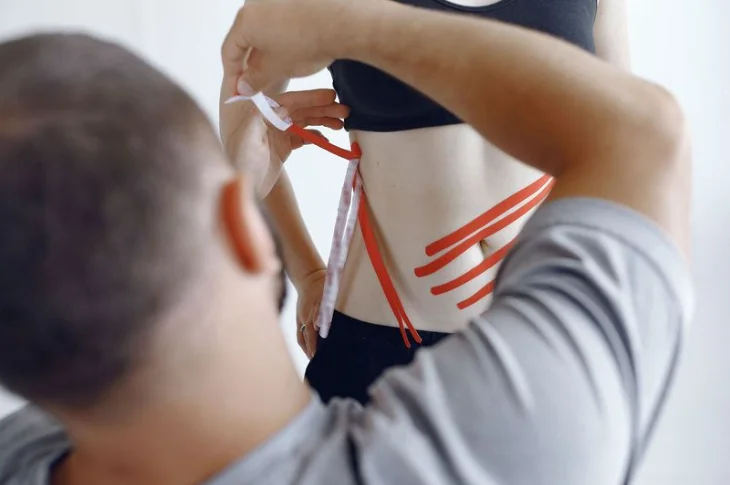
Photo: adoria.lv
Taping is one of the physiotherapy methods used to relieve pain caused by various musculoskeletal system injuries and dysfunctions. Its application is wide, from everyday and sports injuries to chronic pain and oncological diseases.
Evaluating the patient's complaints, diagnosis and individual body characteristics, the physiotherapist adapts the most suitable taping method and precisely determines the tape strip tension and application angle. However, patients increasingly choose to perform taping at home.
Can taping at home provide the desired effect, or on the contrary – worsen the problem, tells physiotherapist at the Health and Beauty Center Māris Locāns.
Taping Methods and Application
The taping effect is based on skin receptor stimulation, muscle function modulation and lymphatic system activation. Tape (body part fixator, kinesiology tape) is an elastic cotton strip coated with acrylic adhesive and is intended to support muscles, joints and soft tissues. Unlike regular bandages or orthoses, the tape does not restrict movement, but supports muscles and joints, reducing pain, promoting lymphatic drainage and improving blood circulation.
When performed correctly, this method can reduce acute and chronic pain, support joints, improve muscle function and promote faster recovery.
- Mechanical support: the tape strip provides light compression that helps support muscles and joints, reducing load and promoting proper musculoskeletal system biomechanics.
- Neurophysiological stimulation: the tape stimulates skin receptors and acting on the nervous system, thus reducing pain and discomfort.
- Lymphatic drainage promotion: lymphatic drainage taping technique can help improve lymphatic drainage, thereby reducing swelling.
Taping is an effective adjunct therapy in treating various musculoskeletal problems, including back, shoulder, neck, knee acute and chronic pain relief, faster recovery from strains, sprains, bruises, swelling reduction in postoperative period, after injuries or lymphatic system disorders, posture correction and other musculoskeletal injuries and diseases.
Different Taping Techniques
Depending on the patient's diagnosis and complaints, different taping techniques are applied:
- stabilizing: most often used after strains, sprains, ligament injuries and inflammations, as well as in chronic pain cases, providing joint stability, reducing pain and discomfort, thus facilitating pain-limited physical activities, or on the contrary – limiting excess movement range;
- activating: more often used in muscle weakness, atrophy cases, also for pain relief, activating muscle function and activity, improving blood circulation and lymphatic drainage;
- corrective: used in posture disorders, back, neck and extremity pain and dysfunction cases, correcting muscle imbalance, as well as affecting muscle tone and length, thus improving posture and movement coordination;
- lymphatic drainage: very effective for various types of swelling, often in acute injuries, as well as in various oncological diseases.
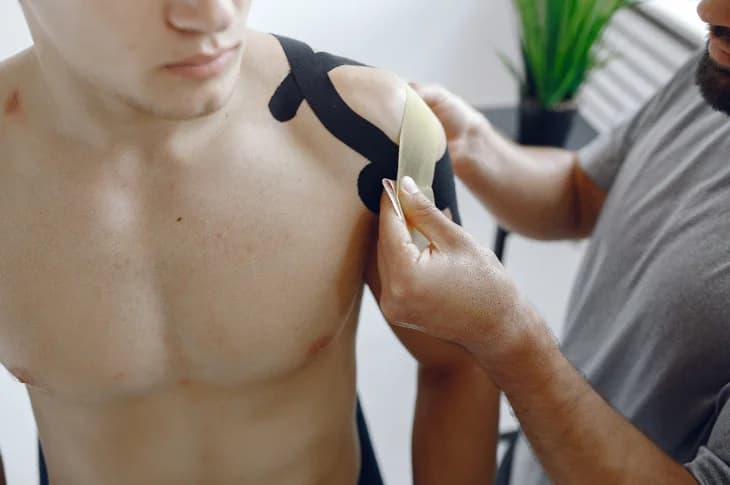
Photo: freepik.com/Freepik
Taping at Home: Is it Recommended and Safe?
It is important to consider that in case of various injuries and dysfunctions, taping is only part of therapy, and it should definitely not be used as the only and main treatment method. Taping is recommended only after the patient has a precise diagnosis established, all necessary examinations performed, treatment therapy prescribed, and taping is indicated as a safe and recommended adjunct therapy to reduce symptoms and accelerate the treatment process.
If the patient does not have in-depth knowledge of taping and has not previously visited a physiotherapist, taping at home is definitely not recommended, and most often does not provide the desired effect.
- Incorrectly applied, the tape can worsen the condition, cause skin damage or nerve irritation. Also, it should be considered that each patient has their own individual anatomical and physiological characteristics that must be taken into account in the tape application process, and they can only be evaluated by a specialist with in-depth knowledge.
In some cases, taping at home can be performed after consultation with a physiotherapist. In such a case, the physiotherapist provides precise instructions for correct tape application and removal.
Taping and Other Physiotherapy Methods
When facing various musculoskeletal injuries and dysfunctions, the rehabilitation process most often also includes physiotherapy. Depending on the patient's condition and diagnosis, the physiotherapist prescribes an effective, yet gentle and supportive course of physiotherapy methods that provide long-term results, excluding additional injury and discomfort risk.
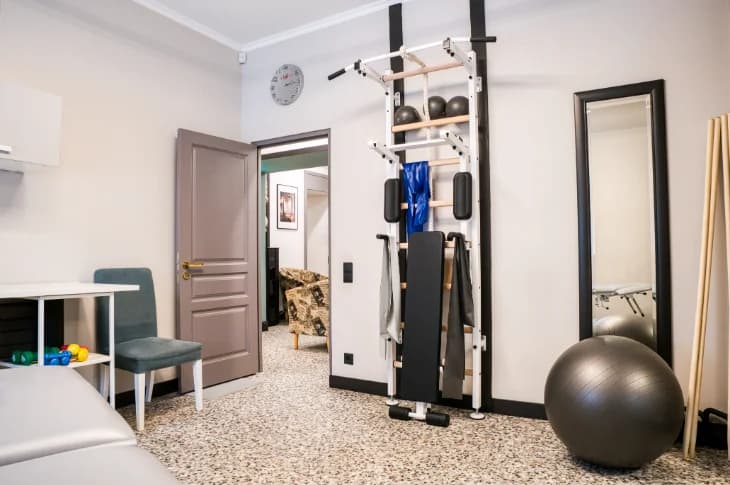
Photo: adoria.lv
Using neuro-orthopedic and holistic treatment approach, the patient may be prescribed not only taping, but also therapeutic exercises, fascia mobilization with fascia knives, therapeutic massage and exercises with TRX system.
Combined with other rehabilitation methods, including medication and dietary supplement therapy and various physical therapies, not only the acute condition is improved, but muscles, joints and ligaments are strengthened, posture improved, biomechanical disorders corrected, etc.
Physiotherapist in Riga, at Health and Beauty Center Adoria
Wide range of physiotherapy services, experienced physiotherapists, therapeutic and classical massage, back massage, therapeutic exercises and other treatment services at the Health and Beauty Center Adoria, Riga, A. Čaka Street 70-3. Entrust the care of your health to professionals!