Using Dental Floss: Why and How to Use It Correctly?

Photo: freepik.com/Freepik
Although the toothbrush excellently handles cleaning tooth surfaces, it cannot reach the narrow gaps between teeth where food residues and bacteria accumulate. These hard-to-reach places become an ideal environment where bacteria multiply and plaque accumulates, which in turn can cause caries, gum inflammation and even tooth loss.
Therefore, in this article, dental hygienist at the Health and Beauty Center Adoria Anita Preisa explains why using dental floss is so important for maintaining oral health, and provides tips on how to use dental floss correctly to achieve optimal results.
The Importance of Using Dental Floss in Oral Health
Using dental floss is an essential part of oral health that unfortunately is often neglected. Since it is not possible to effectively clean interdental surfaces with a toothbrush, where plaque bacteria accumulate most intensively, dental floss is an indispensable aid in the fight against caries and gum diseases.
Plaque, a sticky film that forms on teeth, contains bacteria that produce acids, damaging tooth enamel and causing caries. Regular and correct use of dental floss helps remove this plaque and food residues, thereby reducing the risk of caries and preventing bad breath.
In addition, flossing helps reduce the risk of gum inflammation or gingivitis – a gum disease that manifests as gum redness, swelling and bleeding. If left untreated in time, gingivitis can progress to periodontitis – a serious and long-term treatable gum disease that damages tissues and bone around teeth, eventually leading to tooth loss.
Using dental floss is important for everyone, but especially regularly for people with closely spaced teeth, orthodontic appliances (braces), as well as artificial dental structures, such as prostheses, bridges and crowns, because in these cases food residues accumulate and get stuck more easily.
How to Use Dental Floss Correctly?
Although using dental floss may seem simple, it is important to do it correctly to avoid injuring the gums and effectively clean the spaces between teeth. Here are some tips for correct dental floss use:
- Cut about 45 cm of dental floss and wrap it around the middle fingers, leaving about 2–3 cm of floss for work. Hold the floss tightly between thumbs and index fingers.
- Gently insert the floss between the teeth using sawing motions. Do not push the floss with force, as it can traumatize the gums. Always choose waxed floss, which will slide more easily between teeth.
- Wrap the floss around each tooth side in a “C” shape and carefully guide it up and down along the tooth surface, especially gently cleaning below the gum line as well. Perform about 5 motions for each interdental space.
- Repeat this process for each interdental space, using a clean section of floss.
- After using dental floss, rinse your mouth with water or mouthwash. This will help rinse out remaining food particles and bacteria.
- If bleeding or pain occurs during dental floss use, consult your dentist or hygienist. Possibly, there is gum inflammation or another problem that needs treatment.
Which Dental Floss to Choose?
- Waxed floss: coated with a thin layer of wax that facilitates floss sliding between teeth. This floss is a good solution for beginners or people with closely spaced teeth, as it slides more gently between teeth and does not cause discomfort.
- Unwaxed floss: without wax coating, which catches plaque more easily. However, it may be harder to insert into narrow interdental spaces and even break if teeth are closely spaced or there are uneven spots.
- Expanding floss: upon contact with saliva, this floss expands, filling the interdental space and cleaning it more effectively. It is a good solution for people with sensitive gums, larger interdental spaces, or when more thorough cleaning is needed around crowns, bridges or braces.
- Tape-like dental floss: flatter and wider than regular floss, which effectively cleans very narrow interdental spaces.
There are also other alternatives available if using regular dental floss is difficult or does not seem effective enough, such as special interdental brushes and irrigators.
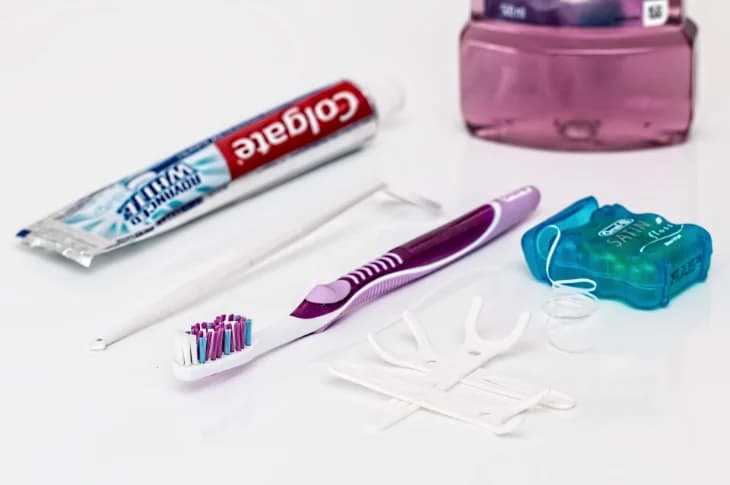
Photo: pixabay.com/Pixabay
Dental Floss as Part of Daily Oral Care Routine
Using dental floss should be included in the daily oral care routine, once a day – in the evening, along with brushing teeth with fluoride toothpaste. Regardless of whether you choose an electric or manual toothbrush, dental floss is necessary to clean areas that cannot be reached with a toothbrush.
It is important to remember that although dental floss helps remove plaque between teeth, it cannot replace professional tartar removal. Tartar is hardened plaque that can only be removed by performing professional dental hygiene, using special instruments. If tartar is not removed in time, it eventually causes gum inflammation (gingivitis) and periodontitis, which can lead to tooth loss. Tartar accumulation and gum inflammation contribute to bad breath formation and negatively affect the aesthetic appearance of teeth.
- Have you heard of methods for removing tartar at home? Read the article “Tartar Removal at Home – Can It Replace a Dental Hygienist?” and find out why it is not only ineffective but also dangerous!
Dental Floss and Care for Children's Dental Health
Proper dental hygiene, including using dental floss, is vitally important not only for adults but also for children to ensure a healthy oral cavity and prevent dental problems in the future. Children should start using dental floss independently from about 5 years old, every evening, after brushing teeth. Until then, parents are the ones who clean between children's teeth!
It is important to remember that pediatric dentistry includes not only regular dentist visits but also dental hygienist visits, recommended from 2 years old. The first visit to the dental hygienist can be planned at 1 year old, or after the first teeth appear.
Although in the first visit, the hygiene procedure will most likely not be performed, this visit is a great opportunity to introduce the child to the dental office and create a positive experience. Also, during the first visit, the hygienist provides parents with valuable advice on child oral care and nutrition.
Meanwhile, when the child reaches 4–5 years old, the dental hygienist will help teach the child to brush teeth correctly and use dental floss. But it is important to remember that parents' active involvement and support is very important for the child to develop good dental hygiene habits from an early age.
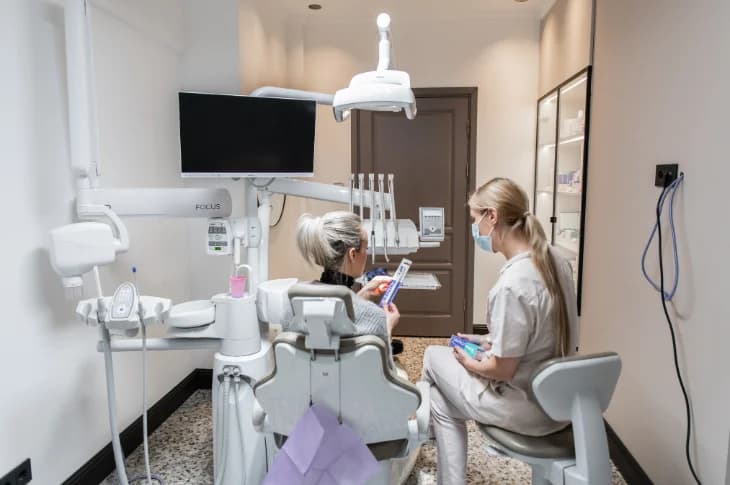
Photo: adoria.lv
Dentistry for the Whole Family at Health and Beauty Center Adoria
A wide range of dental services and dental hygiene for adults and children at the Health and Beauty Center Adoria! Entrust the care of your dental beauty and health to professional and experienced dental specialists!