Children's Skin Care After Swimming Pool or Sea: Dermatologist Recommendations
Photo: freepik.com/Freepik
Summer season and water fun provide not only refreshment in hot weather and improve children's physical form but also many positive emotions. However swimming in chlorinated pool water or salty sea water can challenge child's delicate sensitive skin whose protective abilities still developing. With practical advice how properly care for child's skin after swimming to avoid dryness, irritation, other skin problems, continues to share Health and Beauty Center Adoria dermatologist Jevgenija Vladimirova.
In this article you'll learn:
- Children's skin specifics: why child's skin reacts to external irritants much more sensitively than adult skin?
- Water impact: what main risk factors skin faces from chlorinated pool or salty sea water
- Care tips: what's proper sequential action for skin condition restoration immediately after swimming?
What are children's skin anatomical and physiological features
Children's skin differs from adult skin – thinner, its upper layer or epidermis not fully matured. Skin protective barrier formed by lipid layer in children more fragile thus much easier loses moisture and susceptible to external environment irritants.
Also skin pH level in children closer to neutral compared to mildly acidic adult skin pH naturally providing protection against pathogenic or harmful microorganisms growth. For these reasons substances contacting skin like chlorine or salts can much deeper and faster affect skin structure causing dryness, redness, discomfort. Also child's skin thermoregulation abilities weaker meaning quicker reacts to temperature fluctuations.
This factors combination makes children's skin care task requiring special knowledge and understanding. Thus dermatologist experienced with children best specialist knowing these age physiological features and providing most accurate recommendations for children's skin health maintenance.
What main skin irritants in pool and sea water?
Photo: freepik.com/Freepik
Main factors affecting skin condition after swimming are chlorine in pool water and salt concentration in sea water. Though both environments provide excellent active recreation opportunity, their impact on skin protective barrier different but equally seriously taken.
Meanwhile worth mention certain chronic skin diseases water procedures can have therapeutic effect. E.g., salty sea water can help reduce psoriasis symptoms, while swimming weakly chlorinated water in some cases reduce bacterial load on skin in atopic dermatitis patients.
Exactly therefore with chronic skin diseases important dermatologist consultation to determine if in specific case swimming brings more benefit or additional risks.
- Chlorine used for pool disinfection effective against bacteria but also chemically active substance. Contacting skin destroys natural lipid layer responsible for moisture retention in skin. Children with sensitive skin especially atopic dermatitis situation double-edged. Though chlorine antibacterial effect sometimes beneficial, its irritating drying properties usually prevail if proper skin care after swimming not followed thus causing disease flare-up.
- Sea water though rich in minerals due high salt concentration acts by osmosis principle – "draws" moisture from skin cells. After swimming and water drying salt crystals remain on skin continuing irritate and intensify moisture loss.
Main risks to skin after pool or sea swimming several including:
- Dehydration: both chlorine and salt promote skin moisture loss making noticeably dry, tight, dull.
- Protective barrier damage: weakens skin natural protective layer shielding from environment impact thus allowing irritants and allergens easier entry.
- pH level changes: chlorinated water can disrupt skin natural mildly acidic environment (pH) acting as shield against unwanted bacteria thus reducing natural defenses.
- Chronic skin disease exacerbation: children already having skin disease like atopic dermatitis, chlorine and salt irritating effect can easily intensify symptoms – dryness, redness, itching – especially if immediate skin rinsing and moisturizing not done.
How distinguish usual allergic reaction or irritation from rashes indicating more serious illness requiring immediate specialist examination? Learn all reading article "With What Children's Rashes Definitely See Dermatologist?".
How properly care for child's skin after swimming?
To minimize negative impact on skin important follow specific care routine immediately after water procedures end. Not complicated but requires regularity and proper product selection.
Mandatory rinsing with clean water
First and most important step after leaving pool or sea is skin rinsing with lukewarm clean water in shower. This step mechanically washes off skin surface chlorine residues, salt crystals, other potentially irritating substances and microorganisms. Recommended use mild pH neutral washing product without fragrances and dyes to avoid additional irritation.
Gentle skin drying
After shower skin dried very gently. Intensive towel rubbing can cause microtraumas to already sensitive skin and intensify irritation. Instead skin patted dry with light movements using soft clean towel. Special attention to skin folds – armpits, groin, behind knees where moisture can remain longer creating favorable environment for bacteria growth.
Moisturizers importance and selection
This most important step for skin protective barrier restoration. Moisturizing or emollient applied immediately after drying while skin still slightly damp. Helps more effectively "lock" moisture in skin and quicker restore lipid layer. Important choose hypoallergenic products without alcohol, fragrances, dyes. For children's skin suitable products composition look for:
- ceramides: lipids naturally in skin forming protective barrier;
- panthenol (B5 provitamin): soothes skin, reduces redness, promotes regeneration;
- glycerin: effective humectant attracting water helping retain in skin;
- shea butter or cocoa butter: natural oils nourishing skin forming protective layer.
How dermatologist helps if skin problems appear?
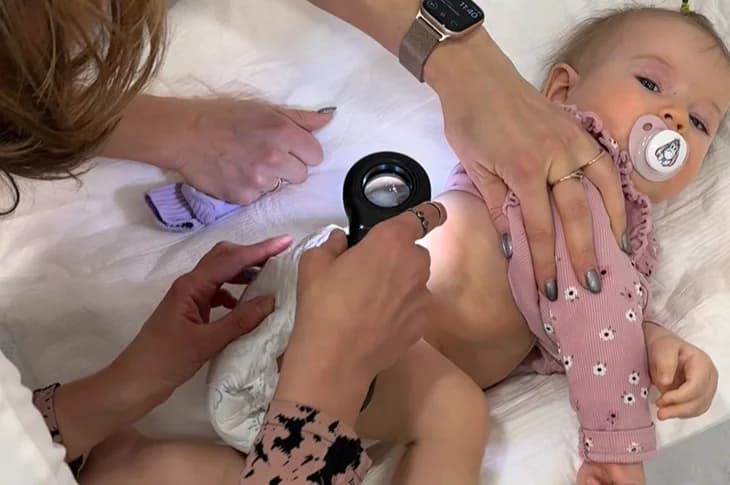
Photo: adoria.lv
If despite proper care persistent redness, rashes, flaking, or severe itching appears on child's skin, specialist consultation needed. Dermatologist first conducts thorough anamnesis gathering clarifying symptom development and performs skin examination.
Specialist distinguishes usual skin dryness from more serious conditions like atopic dermatitis flare-up, contact dermatitis, or fungal infection developing in moist environment. Treatment plan individualized based on diagnosis and may include specific therapeutic creams and lifestyle/care habit change recommendations.
- Endless scratching, restless sleep, red scaly skin patches – how understand if just sensitive skin or first atopic dermatitis signs? Get clarity on symptoms and learn how act reading article "How Recognize Atopic Dermatitis in Children and When See Doctor?".
Should every new skin formation be checked?
After summer season when skin exposed not only water but also sun rays, parents often have questions about new or existing skin formations like moles. Not every formation dangerous but any changes require attention.
Such cases indispensable method for precise diagnosis is dermatoscopy. Quick, painless, non-invasive examination where dermatologist with special device – dermatoscope – multiple magnification assesses skin formation structure.
Dermatoscopy allows early diagnose potentially malignant changes distinguish from benign preventing unnecessary worry or conversely starting timely treatment.
Consultation with specialist recommended if observed:
- new moles appearing rapidly growing;
- existing moles shape, color, or size changes.
- formation starts itching, bleeding, or causes discomfort.
Professional dermatologist help at Health and Beauty Center Adoria

Photo: adoria.lv
If child's skin condition after swimming causes concern or professional skin formation diagnosis needed, Health and Beauty Center Adoria experienced dermatologists provide professional help. Book visit with our dermatologist today to receive individual consultation and best solutions for child's skin health!