How Recognize Atopic Dermatitis in Children When Turn to Doctor?
Photo: freepik.com/Freepik
Atopic dermatitis often also called atopic eczema one of most common chronic skin diseases in children affecting more more babies worldwide. Not only physical but also emotional challenge for both child entire family thus timely disease recognition correct action particularly important. To understand this disease nature symptoms necessary action shares advice Health and Beauty Center Adoria dermatologist Dace Beķere.
Most Important about Atopic Dermatitis Briefly:
- Causes: disease basis genetic predisposition skin protective barrier disorders immune system characteristics combination;
- Main symptoms: most characteristic signs pronounced skin dryness intense itching irritated red skin patches;
- Treatment approach: therapy basis regular skin moisturizing provoking factors elimination doctor-prescribed topical preparations during flare-ups. Severe uncontrolled widespread atopic dermatitis case prescribed oral medications.
What Atopic Dermatitis What Causes It?
Atopic dermatitis chronic relapsing – with exacerbation remission complete disappearance periods occurring – inflammatory skin disease. Its development determined by several factors where main role played by heredity immune system functional characteristics.
Genetics Immune System – Main Risk Factors
For most children developing atopic dermatitis family history also includes other so-called atopic spectrum diseases e.g., allergic rhinitis hay fever bronchial asthma. Indicates inherited predisposition.
Children with atopic dermatitis characteristic skin barrier function imperfection – skin unable sufficiently effectively retain moisture protect body from environmental irritants allergens. This skin barrier imperfection allows allergens seemingly harmless irritants (fragrances surfactants household chemicals laundry personal hygiene products) easier enter deeper skin layers causing immune system reaction in turn leading to inflammation redness itching.
Environmental Factors Impact
This inherited predisposition creates situation where child's body reacts enhanced to various external stimuli which healthy skin wouldn't cause problems. Though basis genetic disease course flare-ups significantly affected by various environmental factors triggers. Can be:
- allergens: dust mites pet dander pollen certain food products most often – milk eggs wheat soy nuts;
- irritants: rough synthetic wool clothing soaps fragrances household chemicals hard calcareous water;
- climatic conditions: cold dry air in winter also sharp temperature fluctuations can exacerbate skin dryness;
- infections: bacterial (especially impetigo Latvian also called pus impetigo) viral infections can trigger disease flare-up also spread faster more aggressively on dry skin background;
- stress: also emotional stress based on patient experience can be factor worsening skin condition statistically proven provoker for other chronic dermatoses (psoriasis);
- friction trauma: skin scratching intensifies itching while itch further promotes scratching creating "vicious circle". Especially small children important proper skin care treatment avoid such situation.
Atopic Dermatitis Signs in Different Age Stages
Important note atopic dermatitis manifestations can differ depending on child's age. Clinical picture changes disease transitioning from acute phase in infancy to more chronic drier form later in childhood. Thus changes not only rash appearance but also their most characteristic body locations.
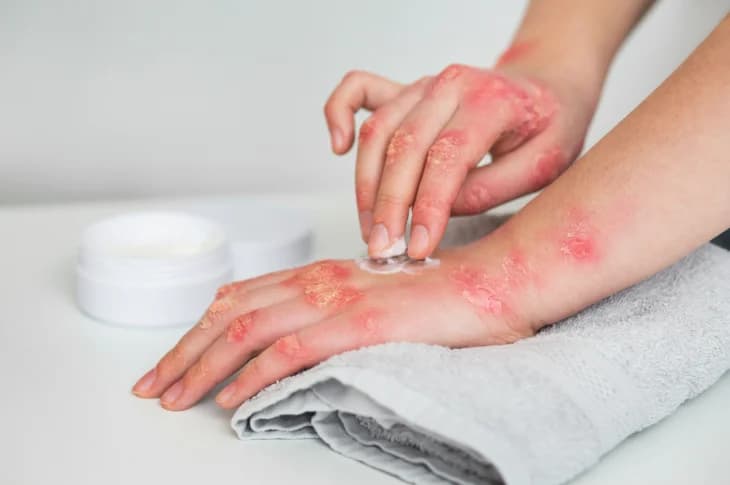
Photo: freepik.com/Freepik
Infancy (up to 2 years)
First atopic dermatitis signs in infant usually appear age from three to six months often coinciding with complementary feeding start period. Disease characteristic very itchy red color rashes can be either slightly raised above skin or form small blisters bursting leading to wet wounds scabs.
At this age inflammation most often affects face (especially cheeks forehead) head hairy part also hand knee joint outer flexion surfaces. Crucially diaper area usually remains rash unaffected. Strong itch main symptom making baby restless significantly affecting sleep quality.
- Often yellowish scales infant's head hairy part parents mistakenly consider atopic dermatitis sign though most often seborrheic dermatitis so-called cradle cap. To learn how distinguish these two conditions read article: "What Cradle Cap How Treat Safely at Home?".
Children (from 2 to 12 years)
Disease transitioning to chronic form changes appearance localization. Inflammation becomes drier skin thickens pronounced skin pattern. Typical places elbow knee joint inner surfaces wrist ankle joints also neck eye area. Itch still dominant symptom constant scratching due often develops also secondary bacterial infection.
Teenagers
Teenage age dermatitis manifestations can be similar to younger children localizing in joint flexures. However often specific problem palm and/or foot dermatitis significantly affecting daily activities quality of life. Skin these areas very dry cracking inflamed.
When Needed Children's Dermatologist Consultation?
Parents should turn to children's dermatologist noticing first suspicious signs potentially indicating atopic dermatitis. Doctor visit mandatory if:
- rashes don't pass within few days/weeks or spread wider;
- itch so strong disturbs child's sleep daily activities;
- rashes start "weep" appear yellow scabs pus potentially indicating bacterial infection;
- home skin care products provide no improvement;
- family doctor recommended remedies medications don't ensure sufficient skin change control or family doctor recommends specialist – dermatologist – consultation develop long-term treatment plan;
- suspicion of specific food product environmental factor as disease trigger.
Timely precise diagnostics basis for successful disease control. Allows distinguish atopic dermatitis from other skin diseases with similar symptoms e.g., seborrheic dermatitis psoriasis thus preventing wrong treatment.
During consultation specialist not only performs orders necessary examinations helping establish diagnosis but also develops individual treatment skin care plan. Covers both acute symptom reduction long-term strategy for disease control. Important step also parent education about correct action in daily life during disease flare-ups.
- Though atopic dermatitis common problem child's skin also characteristic many other rash types whose causes necessary action can significantly differ. More about how recognize different rash types in children read article: "What Child Rashes Definitely Need Turn to Dermatologist?".
How Diagnosis Determined?
Path to correct diagnosis starts with open conversation trust between doctor parents. Important for specialist know when how first complaints appeared what possibly intensifies them whether similar health problems e.g., allergies asthma found also in other family members. After this detailed conversation medical history collection follows thorough child's skin examination. During children's dermatologist evaluates:
- rash nature appearance: whether red dry or conversely weeping.
- localization: where on body rashes located as appear in typical places different ages.
- skin condition overall: also assessed general skin dryness level inflammation intensity scratching traces signs potentially indicating secondary bacterial infection.
Dermatoscopy for Detailed Skin Structure Study
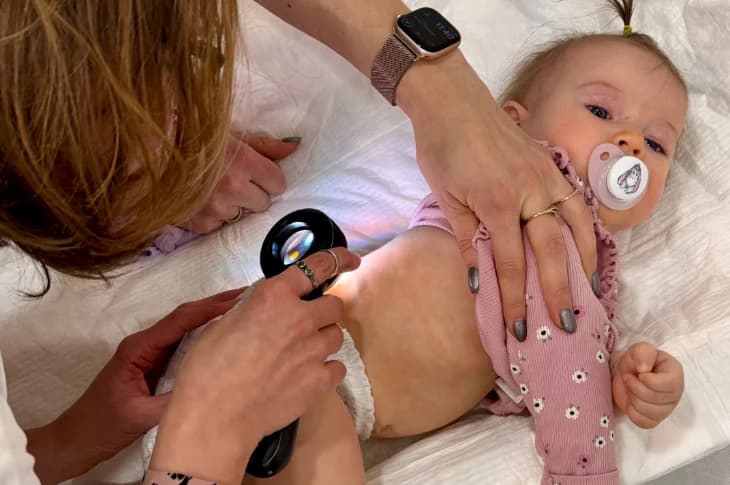
Photo: adoria.lv
Though dermatoscopy primarily used for moles other skin formations diagnostics separate cases can be useful also distinguish atopic dermatitis from other skin diseases especially infections with similar signs.
With dermatoscope help doctor can detailed study skin surface structures blood vessel pattern exclude psoriasis fungal infections other skin diseases whose early manifestations sometimes can resemble eczema. Where necessary can be ordered also blood tests obtain fuller picture of little patient's overall health condition.
Atopic Dermatitis Treatment Skin Care Basic Principles
Unfortunately parents need realize atopic dermatitis treatment most often long-term process involves skin care habits routine long-term changes. Treatment goal reduce symptoms prevent flare-ups improve child's quality of life.
Therapy foundation proper regular skin care – continuing suitable products regular use also after flare-up end reduces further flare-ups risk severity.
- Emollients use: child's skin regularly at least 2–3 times a day need moisturized nourished with special pharmacy-purchased creams ointments (emollients). Restore damaged skin protective barrier reduce dryness.
- Proper bathing: bathing shower duration shouldn't exceed 5–10 minutes using warm not hot water. Use gentle soap fragrance-free washing products with neutral pH level nourishing moisturizing composition. Optimal choice shower oils shower creams.
- "Wet technique" observance: immediately after washing skin gently pat dry with towel not rubbing 2–3 minutes on still slightly damp skin apply generous emollient layer.
Medication Therapy During Flare-Ups
In disease exacerbation case when pronounced inflammation itch appears daily care alone insufficient. Such cases doctor prescribes topical medications most often including corticosteroid calcineurin inhibitor containing creams/ointments quickly effectively suppress inflammation reduce itch. Topical medications (if diagnosis confirmed) Latvia fully covered by state both children adults.
Doctor selects appropriate strength preparations taking into account child's age inflammation severity body zone as e.g., face skin used weaker concentration products. Calcineurin inhibitors particularly valuable alternative for sensitive zones e.g., face eyelids skin folds where long-term strong steroids use undesirable.
To reduce tormenting itch particularly disturbing sleep additionally can be prescribed also short-term oral antihistamines. If proven allergies may need control diet daily habits also reckon with antihistamine daily use; separate cases possible perform desensitization therapy with allergologist. Cases when inflammation joined by bacterial infection treatment scheme supplemented with topical oral antibiotics.
Professional Help at Health and Beauty Center Adoria
Photo: adoria.lv
Atopic dermatitis caused problems don't need solved alone especially if existing treatment provides no results. Our experienced dermatologists in Riga Health and Beauty Center Adoria A. Čaka street 70-3 help find best solution performing precise diagnostics applying individual therapy. Book consultation!